
María Teresa Linares: The Musicologist Who Documented Cuban Son

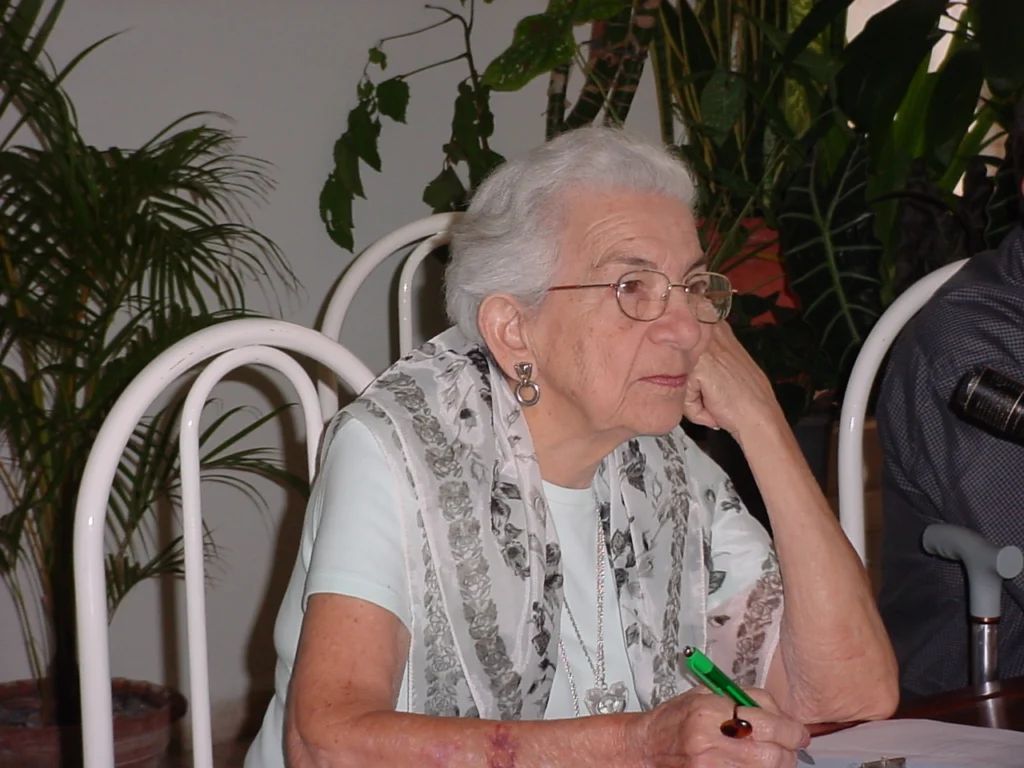
María Teresa Linares Savio (1920–2021) was a Cuban musicologist and educator who spent more than sixty years documenting Cuba’s son, punto cubano, and popular music. With her husband Argeliers León, she helped found Cuban ethnomusicology and wrote key works including La música y el pueblo de Cuba (1974).
A Life in Cuban Musicology
María Teresa Linares was a Cuban musicologist whose career spanned more than six decades. Born in 1920, she trained in music in Havana and sang with the Sociedad Coral de La Habana. That choir connected her to Havana's choral and research circles and gave her an early view of Cuban repertoire.
She married the composer and musicologist Argeliers León, and the two worked as partners in research and publishing. Linares later collaborated with the Centro de Investigación y Desarrollo de la Música Cubana (CIDMUC) and with Egrem, the state recording and publishing enterprise. Those institutions gave her access to field recordings, archives, and popular releases that fed her written work and catalogs.
With León, Linares helped build the institutional study of Cuban popular and folk music, a field now associated with their joint books and cataloging projects.
Key Works on Cuban Music
Linares wrote and co-wrote several reference books that map Cuban music from popular song to rural tradition. The table below lists three titles most often cited in later research.
| Work | Year | Focus |
|---|---|---|
| La música popular | 1970 | A study of Cuban popular music, one of the early systematic looks at commercial and popular genres. |
| La música y el pueblo de Cuba | 1974 | A broad survey of Cuban folk and popular music written in collaboration with Argeliers León. |
| El punto cubano | 1999 | A study of punto cubano, the rural sung tradition of Cuba, still cited as a standard reference. |
These three titles show the progression of her research from broad popular music to focused rural traditions. Each one paired written analysis with documentary work in archives and recording studios.
The 2012 issue of Boletín Música (#32), published by Casa de las Américas, compiles her biographical timeline, bibliography, and discography in one place. Researchers still use that catalog to trace the full range of her output. The book El punto cubano by María Teresa Linares remains a standard reference for the rural sung tradition.
Son, Punto Cubano, and Recorded Legacy
Linares's Cuban folk music research covered the son, a syncopated song and dance form, and punto cubano, a rural sung tradition. She also contributed to recording projects that preserved popular and folk repertoire. The album Cancionero Hispano-Cubano (2015) gathers 20 songs, and Cantos de Altares de Cruz documents traditional altar chants. Her work connects to the wider history of Cuban popular song, including commercial rhythms such as Eliseo Grenet’s sucu-sucu, a syncopated dance style.
These recordings sit alongside her written studies as evidence of the sounds she analyzed. Her documentation of son and punto cubano reflected a larger Cuban effort to record music that was rarely written down. Both forms are central to Cuban identity: son developed into modern salsa, while punto cubano remains a rural poetic song form. The presence of El punto cubano in her bibliography shows that written study and recorded practice moved together.
Where to Consult Her Work
The 2012 issue of Boletín Música (#32), published by Casa de las Américas, is a starting point for her bibliography and discography. The print and catalog collections of the Biblioteca Nacional José Martí in Havana hold many of her published titles. The archives of CIDMUC and Egrem hold recordings and documents tied to her decades of work. Researchers usually begin with the Casa de las Américas issue and then move to library and archival catalogs, because no single online source brings together her full output. These collections can be explored alongside broader Cuban history archives.
Legacy
Linares lived from 1920 to 2021, and her 100th birthday in 2020 marked a century that began before Cuban musicology existed as a formal field. With Argeliers León, she helped build that field, and her books remain reference points for later researchers. The institutions she worked with continue to hold the recordings and catalogs that support new work. Her documentation effort also belongs to Cuba’s cultural life beyond music.
FAQ
Who was María Teresa Linares?
Cuban musicologist and educator (1920–2021) who documented son, punto cubano, and Cuban popular music for over sixty years.
What is María Teresa Linares famous for?
Key books La música popular, La música y el pueblo de Cuba, and El punto cubano, and for building Cuban musicology with Argeliers León.
Did María Teresa Linares record music?
Yes: field and popular recordings appeared on albums such as Cancionero Hispano-Cubano (2015, 20 songs) and Cantos de Altares de Cruz.
What is El punto cubano by María Teresa Linares about?
A 1999 study of punto cubano, the rural sung tradition of Cuba, still cited as a standard reference.
Sources
- Boletín Música #32, Casa de las Américas, 2012
- CIDMUC/Egrem archives
- Biblioteca Nacional José Martí
Keep reading