
ICAIC Cuban Film Institute: What It Is and Why It Shaped Cuban Cinema

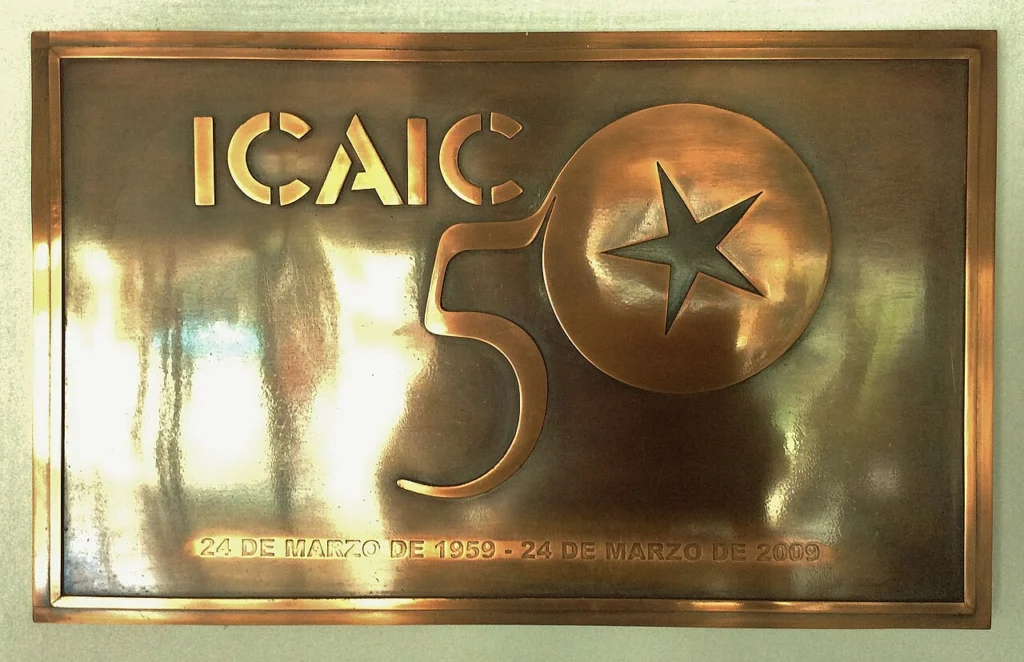
The Cuban Institute of Cinematographic Art and Industry (ICAIC) is Cuba's state film body, created on March 24, 1959. It produced, distributed and exhibited Cuban films, ran the Noticiero ICAIC Latinoamericano newsreel from 1960 to 1990, and remains central to preservation and training.
- The question: What is the ICAIC?
- Background: Why was ICAIC created in 1959?
- Key moments: From 1959 to the present
- What ICAIC produced and distributed
- The Noticiero ICAIC Latinoamericano archive
- Different readings: official instrument or creative laboratory?
- Where to find ICAIC films and records today
The question: What is the ICAIC?
The Instituto Cubano del Arte y la Industria Cinematográficos, known in English as the Cuban Institute of Cinematographic Art and Industry and by its initials ICAIC, was established in Havana under Law 169, the first cultural decree of the Revolution, as Cuba50 records. For much of its history it served as Cuba's only producer of national films and the sole licensed importer and distributor of foreign films, according to the Cooper Hewitt, Smithsonian Design Museum. The mandate combined production, distribution, exhibition, artist training, and the care of a national film archive that grew around the Cuban Cinematheque. Its founding date and legal instrument make it a reference point for the history of Cuban cinema. In practice, ICAIC's name still stands for the central state structure of Cuban film rather than a single studio.
Background: Why was ICAIC created in 1959?
Law 169, approved on March 24, 1959, less than three months after the revolutionary government came to power, opened with the declaration that “film is an art” and then created ICAIC as the body responsible for making that principle real (Cuba50). Its language separated art from commercial constraint, reflecting the founders' view of cinema as a public good. The measure arrived as one of the first cultural decrees of the new government. Cuban filmmakers such as Julio García Espinosa, Tomás Gutiérrez Alea, and Alfredo Guevara had already been working toward a national cinema; Cuba50 notes they had shared that ambition while filming El Megano in 1955. The institute was shaped by a cultural policy oriented toward national identity and toward art that could address the conflicts of its time. Casa de las Américas, founded shortly after, shared that integrationist outlook from Cuban culture to the wider Latin American scene. Cooper Hewitt's record notes that mobile projection units from 1961 reached rural areas where the illiteracy rate could run as high as forty percent and many communities lacked electricity. That same founding period also drew attention in the foreign press; for another perspective, readers can follow how U.S. newspapers covered the early Cuban Revolution.
Key moments: From 1959 to the present
A short timeline shows how the mandate moved from a founding law to an archive with international recognition.
- 1959 — Creation. Law 169 establishes the Cuban Institute of Cinematographic Art and Industry on March 24 in Havana. The law frames film as an art, not simply a commercial product. The same decree belongs to the first cluster of cultural measures after the Revolution.
- 1960 — Newsreel begins. The Noticiero ICAIC Latinoamericano starts its run, a newsreel that would continue until 1990. The institute adds a regular screen record to its growing production and distribution work.
- 2019 — Sixtieth anniversary. Cuban institutions and overseas retrospectives mark sixty years of ICAIC. Cuba50's anniversary essay returns to the early first-decade films that defined the institute's reputation, including Memories of Underdevelopment and Lucía. Humberto Solás, who directed Lucía, went on to make other ICAIC-linked features such as Miel para Oshún, Manuela, Cecilia, and Barrio Cuba.
What ICAIC produced and distributed
Production was only one part of the work. Cuba50's anniversary review stresses that ICAIC produced and stimulated creation, but also distributed film, bringing curated foreign and Cuban work to audiences beyond city theaters. The mobile cinema program, begun in 1961, took screenings into mountains and rural areas, where people often saw film for the first time. Distribution in those early years created new audiences; the traveling cinema was later dramatized in the 1967 documentary For the First Time. The early production slate included Historias de la Revolución, Now!, Death of a Bureaucrat, and the Soviet co-production I Am Cuba; later features such as Memories of Underdevelopment and Lucía became internationally known. The 1960s vanguard spirit, marked by the Salon de Mayo and the Cultural Congress of Havana, gave Cuban film a wider experimental context. ICAIC also opened its own film poster workshop in 1960, which became a distinct artistic school in the hands of designers mentioned in Cooper Hewitt's collection notes. The institutional orbit came to include the Cuban Cinemateca with its archive.
The Noticiero ICAIC Latinoamericano archive
The newsreel Noticiero ICAIC Latinoamericano ran from 1960 to 1990 and functioned as a regular screen record of Cuba and Latin America. Its original negatives now form part of a collection recognized by UNESCO's Memory of the World register. The UNESCO entry, titled “Original negatives of the Noticiero ICAIC Latinoamericano (1960–1990),” treats the material as documentary heritage rather than as a single national broadcast. A short list of what that recognition implies:
- Format: original motion-picture negatives rather than exhibition prints.
- Coverage: three decades, 1960–1990, spanning the newsreel's full run.
- Value: a primary visual record from the period, now under an international preservation designation.
Negatives matter for preservation because later prints and scans depend on their survival. The collection gives researchers continuous material for news events, cultural programming, and daily scenes in Cuba and the wider region.
Different readings: official instrument or creative laboratory?
One reading highlights ICAIC as an instrument of state cultural policy, created to distribute approved ideas and build new audiences. A second reading looks at the same workshops and sees a space for formal experimentation. The poster workshop is a strong example: by 1960 ICAIC had opened its own screenprinting studio, and the resulting Cuban film posters were often designed as poetic visual commentary rather than commercial advertising, as Cooper Hewitt's collection notes. René Azcuy, an ICAIC staff designer, produced more than 250 posters for the agency, including Testimonio and Besos Robados. Both readings can be supported from the record, even if the emphasis changes.
Where to find ICAIC films and records today
The UNESCO register points to the newsreel archive, and the Cuban Cinematheque remains the main institutional home for the wider collection. International retrospectives, such as the Screen Cuba programs, have continued to bring ICAIC-era titles to audiences, though current schedules are best checked in local listings. Together with the wider archive, this material provides a starting point for researchers and general readers looking for primary sources. Start with Cuba Now's film section or the related piece on Hemingway's years in Cuba.
Keep reading